
History of Animation Studio
Pixar Animation Studios

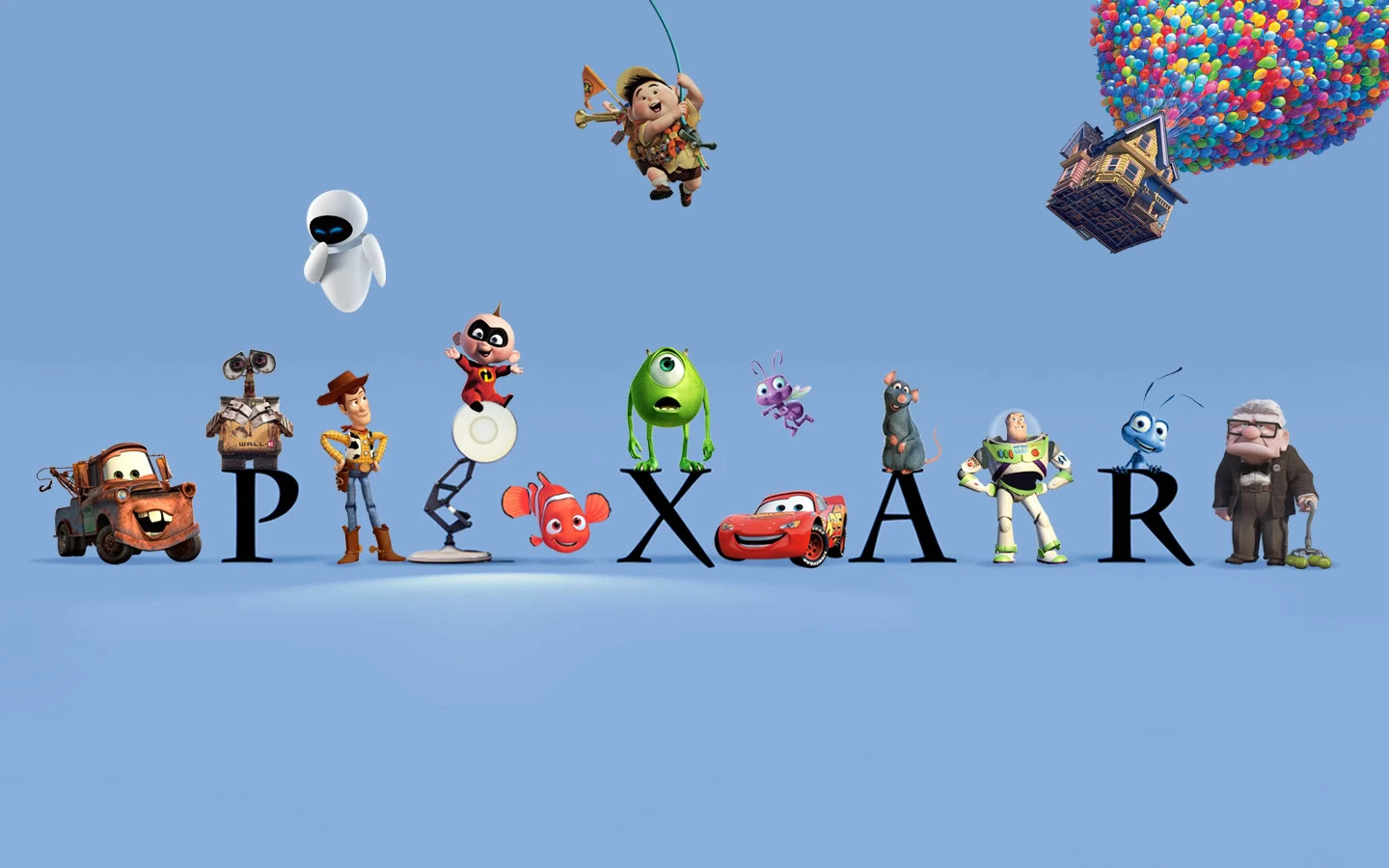
Pixar Animation Studios, a wholly-owned subsidiary of The Walt Disney Company, is an Academy Award®-winning film studio with world-renowned technical, creative and production capabilities in the art of computer animation and creators of some of the most successful and beloved animated films of all time. Pixar has so far produced thirteen films, Toy Story, A Bug's Life, Toy Story 2, Monsters, Inc., Finding Nemo, The Incredibles, Cars, Ratatouille, WALL•E, Up, Toy Story 3,Cars 2, and Brave. (exert from https://pixar.wikia.com/Pixar_Animation_Studios)
Pixar began when president of the New York Institute of Technology, Alexander Schare, was looking for someone to animate a film from a sound recording. Ed Catmull, a computer scientist, along with several other people, started the project (which was never finished), on the East Coast, working with computer graphics. The team successfully started producing video artwork. In 1979, George Lucas of Lucasfilm Ltd. proposed moving the team to the West Coast.
Using an imaging computer called the 'Pixar', Catmull and other employees created graphic programs and equipment for Lucasfilm Ltd. Pixar's software constructed high-resolution, three-dimensional color images of virtually anything, from buildings and cars to tornadoes and aliens (exert from https://pixar.wikia.com/Pixar_Animation_Studios). The 'Pixar' was also used by medical professionals, weather technicians, and prospectors with 3D renderings.
In 1984, John Lasseter an Academy Award winning (animated films) employee of Walt Disney Studios, joined the Pixar group. In 1986, Steve Jobs (Apple Computers) Joined Lucas and paid $10 million for Pixar. He originally instructed the Pixar group to concentrate on technical graphics (they could sell) and put aside their dreams of film and animation.
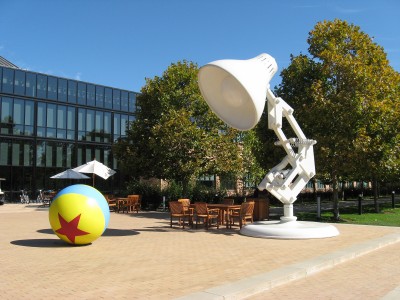
The Pixar group invented software innovations which they used to create a variety of projects. In 1986, Pixar recieved their first Oscar nomination for their short film 'Luxo Jr.' Pixar developed a product called RenderMan which is a computer graphics program that enabled computer artists to introduce color and texture to 3D objects. RenderMan created realistic photo images that were indistinguishable from actual photographs. Using RenderMan 'Tin Toy', written and directed by John Lasseter, won an Academy Award as Best Animated Short Film in 1988.
Steve Jobs (CEO of Pixar) in July, 1989, joined with Colossal Pictures to colllaborate and broker Pixar for television commercials and promotional films. By 1990, many RenderMan products such as hardware and software packages were endorsed by industries such as Digital Equipment, IBM, Intel Corporation, and Sun Microsystems. Pixar and Colossal together creted two television commercials, one was for Life Savers 'Holes' bite-size candies.
In April 1990, Pixar sold off its hardware operations to concentrate on further developing rendering capabilities.
In 1991, Pixar struggled to make an ends meet and turn a profit. Together, Pixar and Walt Disney Studios create Toy Story, the first full-lengthed computer-animated feature film. Their alliance proved successful beyond their wildest expectations.
Despite Pixar winning two Academy Awards and two Gold Clios in 1993 and 1994, Pixar still was not making a profit. In 1995 Pixar sold 100,000 copies of RenderMan and signed a huge liscencing deal with Bill Gates and Microsoft bringing in their first ever profit of $3.1 million. 1995 was a continually successful year for Pixar. Toy Story's release brought in $40 million dollars its first weekend. Both families and critics gave Toy Story rave reviews. NASDAQ shares in Pixar rose from $12 to $45.50. Pixar's market value was now worth $800 million. Toy Story won two Golden Globes and three Oscars.
Through 1999, Pixar continued its advances in computer and graphics technology. They had a lot of competition from Digital Domain and Industrial Light & Magic to Microsoft and Silicon Graphics, in graphics software development. After the success from Toy Story, other studios such as DreamWorks SKG, Turner Broadcasting, Warner Bros., and even Disney tried their hand in creating computerized animation.
After Pixar/Disney's success with Toy Story, A Bug's Life and several short films, they together (as equal partners) made a new deal to produce five more movies within the next ten years. In 1999, After the release of Toy Story 2, the company celebrated its fifth consecutive profitable year, with revenues of $121 million and earnings topping $50 million.

Despite a slow, financially difficult beginning, Pixar Animation Studios had landed on the fast track and was known throughout the world. With its technological breakthroughs and brilliantly crafted animated films, the sky was the limit in the coming decade and beyond. (exert from https://pixar.wikia.com/Pixar_Animation_Studios)
In April, 2010, Pixar Canada opened up with a new studio in Gastown, Vancouver, B.C.
Upcoming projects for Pixar include:
* Monsters University, a prequel to Monsters Inc. due in theaters June 21, 2013.
* The Good Dinosaur, scheduled for a release on May 30, 2014.
* A sequel to Finding Nemo is also rumored.
* Día de los Muertos. The Day of the Dead film is reported to be released in 2016.
List of Pixar films
Toy Story (1995) www.youtube.com/watch?v=m_43XucTd3o
A Bug's Life (1998)
Toy Story 2 (1999) https://www.youtube.com/watch?v=vf9-ERYcfSk
Monster's, Inc. (2001)
Finding Nemo (2003)
The Incredibles (2004)
Cars (2006)
Ratatouille (2007)
WALL-E (2008) https://www.youtube.com/watch?v=woEN_tUVlNI
Up (2009) https://www.youtube.com/watch?v=bC0RvFxf77Y
Toy Story 3 (2010)
Cars 2 (2011)
Brave (2012)
Monster's University (2013) trailer: https://www.youtube.com/watch?v=XQtarhZTOE8
List of Pixar shorts
The Adventures of Andre and Wally B (1984)
Luxo Jr. (1986) https://www.youtube.com/watch?v=46mcpqOVN08
Red's Dream (1987)
Tin Toy (1988)
Knick Knack (1989)
Geri's Game (1997)
For the Birds (2000) https://www.youtube.com/watch?v=e70NIYIfiTc
Boundin' (2003)
One Man Band (2005)
Lifted (2006)
Presto (2008)
Partly Cloudy (2009)
Day & Night (2010)
La Luna (2011)
The Blue Umbrella (2013)
Here is a link to one of the sources of information